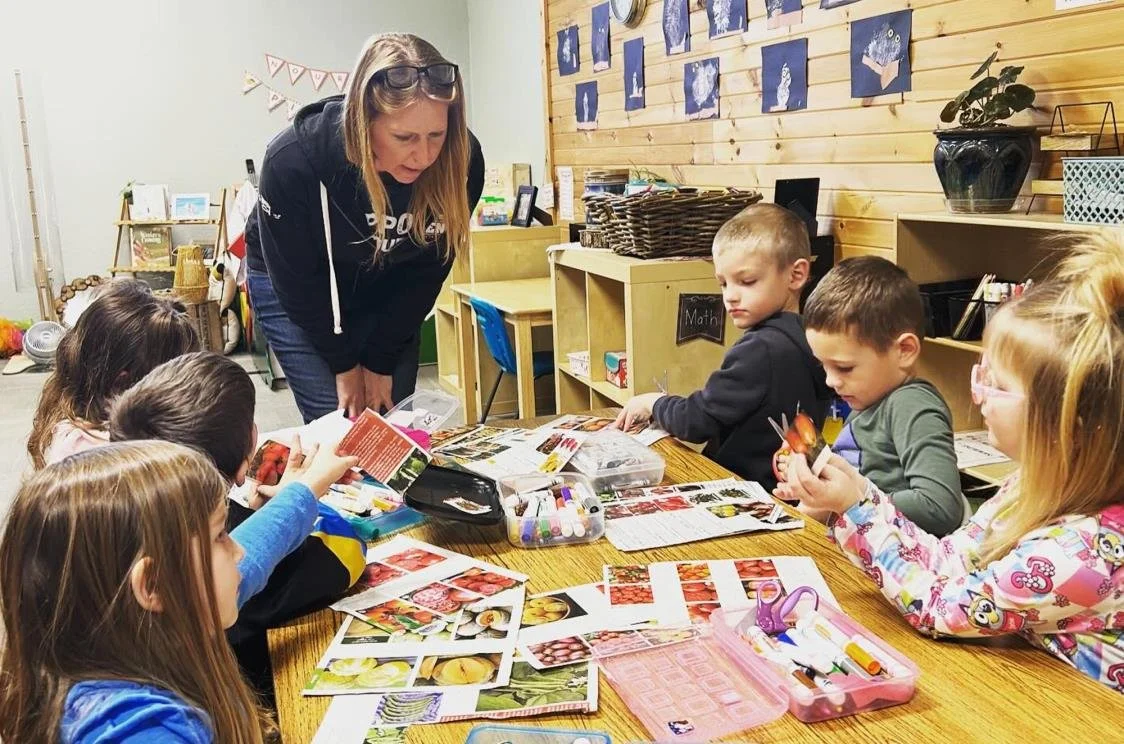
Early childhood is one of the most important stages of human development. During these early years, children begin to understand the world around them, develop communication skills, build relationships, and discover their interests. The experiences children have during this period can influence how they approach learning throughout their lives. One effective way to support this development is through play based learning in early childhood.
Play-based learning allows young children to develop knowledge and skills through enjoyable, meaningful activities. Instead of relying entirely on lectures, memorization, and worksheets, children learn by exploring objects, asking questions, building structures, telling stories, playing games, and interacting with others.
When thoughtfully planned, play becomes much more than entertainment. It provides opportunities to develop early literacy, mathematical thinking, creativity, emotional awareness, and problem-solving skills. According to the National Association for the Education of Young Children (NAEYC), play supports children’s cognitive, social, emotional, physical, and language development.
In this article, we explore what play-based learning means, why it matters in early education, its main benefits, practical classroom activities, and how parents and teachers can create effective learning experiences through play.
What Is Play-Based Learning in Early Childhood?
Play-based learning is an educational approach that uses play and hands-on experiences to help young children develop knowledge, understanding, and essential life skills. It encourages children to explore their surroundings, experiment with ideas, solve problems, and learn through meaningful interactions.
Unlike activities focused only on memorizing information, play-based learning gives children opportunities to participate actively in the learning process. They can make choices, test their ideas, learn from mistakes, and discover new possibilities.
For example, when children build a tower using blocks, they are not simply playing with toys. They are exploring balance, shapes, sizes, spatial relationships, and basic engineering concepts. When they pretend to operate a grocery store, they may practice counting, recognizing numbers, communicating, and cooperating with classmates.
Effective play-based learning combines children’s natural curiosity with purposeful educational goals. Teachers prepare suitable materials and environments while allowing children enough freedom to explore and make decisions.
Key Characteristics of Play-Based Learning
Several characteristics distinguish play-based learning from other early education approaches:
- Active participation: Children learn by touching, moving, creating, experimenting, and exploring.
- Curiosity and discovery: Activities encourage children to ask questions and investigate new ideas.
- Choice and independence: Children have opportunities to select materials, activities, and approaches.
- Social interaction: Children learn to communicate, cooperate, share, and solve problems together.
- Meaningful experiences: Learning connects with familiar objects, everyday situations, and children’s interests.
- Teacher support: Educators guide learning with thoughtful questions, demonstrations, and appropriate resources.
These characteristics help create a learning environment where children feel encouraged to participate and develop confidence in their abilities.
Why Is Play-Based Learning Important in Early Education?
Play is a natural way for young children to explore and understand their surroundings. By incorporating play into early education, teachers can make learning more engaging while supporting several areas of development at the same time.
The NAEYC explains that play can support language development, self-regulation, social competence, cognitive skills, and subject knowledge. UNICEF also highlights the role of play in helping children develop physical, emotional, social, and intellectual abilities.
The importance of play-based learning extends beyond keeping children entertained. It helps build the foundations children need for future academic learning and everyday life.
1. Supports Cognitive Development
Cognitive development includes the skills children use to think, remember, reason, recognize patterns, and solve problems.
Play-based activities provide regular opportunities to practice these skills. For example, puzzles encourage children to recognize shapes and consider how different pieces fit together. Sorting games help them identify similarities and differences, while building activities encourage experimentation and planning.
Children may also develop early scientific thinking through simple experiments. They can observe what happens when objects float or sink, compare different materials, or explore how plants grow.
These experiences encourage children to make observations, form ideas, test possibilities, and learn from results. Rather than simply receiving information, children participate in discovering how things work.
2. Develops Language and Communication Skills
Language development is an essential part of early childhood education. Children need opportunities to listen, speak, understand instructions, express ideas, and communicate their needs.
Play provides natural situations for practicing these abilities. During pretend play, children may create conversations between characters, describe objects, explain their plans, or tell stories about what is happening.
For example, a pretend restaurant activity can introduce words such as menu, order, customer, and payment. Children can take turns being customers and restaurant workers, ask questions, and respond to one another.
Storytelling, puppet shows, picture games, and role-playing can also support vocabulary development and listening skills.
Teachers can strengthen these experiences by introducing new words, asking open-ended questions, and encouraging children to explain their thinking without interrupting their creativity.
3. Encourages Social and Emotional Development
Young children are learning how to understand emotions, build friendships, manage frustration, and interact respectfully with others.
Group play gives them opportunities to practice these skills in everyday situations. Children may need to share materials, negotiate roles, wait for a turn, or decide together how to complete a project.
These experiences help children understand that other people may have different ideas and feelings.
For example, when two children want to use the same toy, an educator can help them discuss possible solutions, such as taking turns or finding another activity they can enjoy together.
Play can also provide a safe way for children to express feelings. Through drawing, storytelling, imaginative games, and role-playing, they may explore experiences that are difficult to describe directly.
Teachers should guide these interactions with patience and help children develop age-appropriate strategies for managing emotions and resolving disagreements.
4. Builds Creativity and Imagination
Creativity helps children explore possibilities, express original ideas, and approach challenges in different ways.
Open-ended play activities are particularly useful because they do not require every child to produce the same result. Building blocks can become a house, a bridge, a spaceship, or an imaginary city. Art materials can be used to create pictures, patterns, models, or imaginative characters.
When children participate in pretend play, they invent stories, develop characters, and experiment with different roles. These activities encourage flexible thinking and creative expression.
Teachers can encourage creativity by offering varied materials and asking questions such as:
- What else could you build with these blocks?
- How might your character solve this problem?
- What would happen if we changed this part?
- Can you think of another way to complete the activity?
The goal is not to provide one correct answer for every activity. Instead, children should have opportunities to explore ideas, experiment, and learn from their own discoveries.
5. Strengthens Early Mathematics Skills
Mathematics begins long before children formally study addition, subtraction, and multiplication. Young learners first develop foundational concepts through everyday experiences involving numbers, shapes, patterns, measurement, and comparison.
Play-based learning makes these concepts easier to explore in meaningful contexts.
Examples include:
- Counting toy animals or building blocks.
- Sorting objects by color, shape, or size.
- Comparing which container holds more water.
- Recognizing patterns during art activities.
- Using pretend money in a classroom shop.
- Measuring towers to see which one is taller.
These activities help children connect mathematical ideas with objects and situations they can understand.
For example, a teacher might ask children to build a tower using ten blocks and then compare it with a tower containing six blocks. Children can count the blocks, compare heights, and discuss the differences.
Through repeated hands-on experiences, children gradually build the understanding needed for more formal mathematics instruction.
6. Improves Physical Development and Coordination
Physical development is another important benefit of play-based learning. Young children need opportunities to move their bodies, strengthen their muscles, and develop coordination.
Outdoor games, dancing, running, climbing, and ball activities support gross motor skills. Activities such as drawing, threading beads, using child-safe scissors, and arranging small objects help develop fine motor control.
For example, children who create pictures using crayons practice hand movements that later support writing. Building with small blocks can improve coordination between the eyes and hands.
Physical play also allows children to explore movement, understand their surroundings, and develop confidence in their abilities.
A balanced early childhood environment should include both active movement and quieter activities, with suitable safety measures for children’s ages and abilities.
7. Promotes Independence and Confidence
Children develop confidence when they have opportunities to make decisions, attempt challenges, and see the results of their efforts.
During play, they may decide what to build, choose materials for an art project, or develop their own rules for an imaginary game. These choices help them practice independence and responsibility.
Play also gives children opportunities to experience manageable difficulties. A structure might fall, a puzzle piece might not fit, or a game might not work as expected. With encouragement, children can try a different approach instead of giving up immediately.
Teachers can support this process by recognizing effort, asking guiding questions, and allowing children time to solve problems.
Rather than completing every task for a child, an educator might say, “What could you try next?” This encourages children to think independently while knowing support is available when needed.
Different Types of Play-Based Learning
Play can take many forms, and each type provides different learning opportunities. A strong early childhood program includes a mixture of play experiences suited to children’s developmental stages, interests, and abilities.
1. Free Play
Free play gives children substantial control over what they do, which materials they use, and how their activities develop.
For example, children may choose to build with blocks, draw pictures, play with toy animals, or create an imaginary world with classmates.
This approach encourages independence, imagination, curiosity, and self-directed exploration.
Educators still have an important role. They provide a safe environment, select suitable resources, observe children’s interests, and intervene when support is necessary.
2. Guided Play
Guided play combines children’s choices with an educator’s learning goals. The teacher prepares an activity and offers support without taking complete control of the experience.
For example, an educator might provide building materials and invite children to create a bridge that can hold several toy cars. Children decide how to construct the bridge while the teacher asks questions about balance, strength, and design.
Guided play can help connect enjoyable activities with specific learning objectives, including vocabulary, mathematical concepts, and problem-solving.
It also allows teachers to adjust their support according to children’s needs and progress.
3. Pretend and Role Play
Pretend play allows children to imagine situations, adopt roles, and create stories.
A classroom might include a pretend hospital, grocery store, kitchen, post office, or travel agency. Children can act as doctors, shopkeepers, customers, or visitors while communicating and cooperating with others.
These activities encourage language development, social understanding, creativity, and early numeracy.
Role play can also introduce children to everyday responsibilities and community roles in a simple, age-appropriate way.
4. Constructive Play
Constructive play involves creating or building something using materials such as blocks, cardboard, clay, recycled containers, or construction toys.
Children may design a house, build a tower, make a model vehicle, or create a small town.
These activities support spatial awareness, planning, creativity, fine motor development, and early engineering concepts.
Educators can extend the experience by asking children to explain their designs or consider how they might improve a structure.
5. Outdoor and Nature-Based Play
Outdoor play gives children opportunities to move, observe nature, and investigate their environment.
Activities may include collecting leaves, observing insects, planting seeds, playing with sand, or creating obstacle courses.
Nature-based experiences can introduce early science concepts while encouraging curiosity and physical activity.
Teachers should choose safe locations, supervise activities appropriately, and consider weather, accessibility, and individual needs.
6. Games and Learning Activities
Simple games can support early academic skills while helping children practice following rules, taking turns, and cooperating.
Examples include matching cards, counting games, picture bingo, shape hunts, and storytelling games.
These activities work best when the difficulty is appropriate for the children’s ages and abilities. Teachers should focus on participation and learning rather than placing unnecessary pressure on children to win.
Practical Play-Based Learning Activities for Preschool Children
Parents and educators do not need expensive equipment to create meaningful play-based learning experiences. Everyday materials and familiar situations can provide valuable opportunities for exploration.
Here are several practical activities that can be used at home or in an early childhood classroom.
Counting and Sorting Games
Provide children with safe objects such as large blocks, toy animals, or colored counters. Ask them to group the objects by color, count each group, or compare which group contains more items.
Learning goals: Number recognition, counting, classification, comparison, and early mathematical reasoning.
Storytelling With Puppets
Use puppets, dolls, or simple paper characters to create a story. Invite children to choose the characters, describe what happens, and suggest different endings.
Learning goals: Vocabulary, listening, imagination, narrative skills, and emotional expression.
Building a Block Tower
Give children blocks and challenge them to build a tower, house, or bridge. Encourage them to test different designs and explain what makes their structures stable.
Learning goals: Spatial awareness, problem-solving, creativity, coordination, and early engineering concepts.
Water and Sand Exploration
Under close adult supervision, let children explore sand or water using suitable containers, scoops, and measuring cups. Ask them to predict which container will hold more or what might happen when water is poured into a different shape.
Learning goals: Observation, measurement, comparison, prediction, and sensory exploration.
Always supervise young children around water and use age-appropriate materials to reduce choking and other safety risks.
Nature Discovery Walk
Take children on a supervised walk and invite them to notice leaves, flowers, clouds, stones, or birds. Encourage them to describe what they observe and compare different objects.
Learning goals: Observation, descriptive language, curiosity, environmental awareness, and early science skills.
Pretend Grocery Store
Create a simple shop using clean, safe household items, picture labels, baskets, and play money. Let children take turns being customers and shopkeepers.
Learning goals: Counting, communication, categorization, social interaction, and practical problem-solving.
These activities can be adapted for different ages, abilities, and interests. The most important element is not the complexity of the materials but the quality of the child’s participation and the opportunities available for exploration.
The Role of Teachers in Play-Based Learning
Teachers are essential to effective play-based learning because they connect children’s interests with meaningful educational opportunities.
Their role is not simply to provide toys and leave children without support. Instead, educators plan environments, observe children’s behavior, introduce useful resources, and provide guidance when it helps extend learning.
Create a Safe and Engaging Learning Environment
Classrooms should include accessible materials, clearly defined activity areas, and spaces for both active and quiet play.
Materials should be suitable for children’s ages, interests, and developmental needs. Books, puzzles, art supplies, building blocks, pretend-play objects, and natural materials can support a variety of learning experiences.
Teachers should also ensure that children with different abilities can participate meaningfully.
Observe Children’s Interests and Progress
Observation helps teachers understand what children enjoy, what they already know, and where additional support may be useful.
For example, a child who repeatedly builds with blocks may be ready for activities involving patterns, balance, or simple measurement. A child who enjoys storytelling may benefit from opportunities to describe pictures or create stories with peers.
Teachers can use these observations to plan relevant activities without forcing every child to learn in exactly the same way.
Ask Open-Ended Questions
Questions can encourage children to think more deeply while preserving their independence.
Instead of asking only questions that require a yes-or-no answer, teachers can ask:
- What do you notice about these objects?
- How did you decide to build it this way?
- What do you think will happen next?
- How could we solve this problem?
- Can you explain your idea to your friends?
These questions encourage children to describe their thinking, consider alternatives, and communicate their discoveries.
Balance Play With Intentional Instruction
Play-based learning does not mean that teachers should avoid all direct teaching. Children may still need clear explanations, demonstrations, feedback, and structured activities.
An effective approach combines child-led exploration, guided play, and intentional instruction according to the learning goal and children’s developmental needs.
For example, a teacher might demonstrate how to recognize a particular shape, then invite children to find that shape in blocks, books, or objects around the classroom.
This balance helps children explore independently while receiving the support needed to develop new skills.
How Parents Can Support Play-Based Learning at Home
Parents and caregivers can reinforce early learning by making play a regular part of family life. Formal lessons and expensive educational toys are not always necessary. Many valuable learning experiences can happen through ordinary household activities.
Here are some practical ways parents can help.
Read and tell stories together. Ask children to describe pictures, predict what might happen next, and invent alternative endings.
Encourage creative activities. Provide suitable paper, crayons, blocks, and craft materials so children can draw, build, and experiment.
Include children in everyday tasks. Sorting laundry, counting fruit, arranging safe kitchen items, or matching socks can introduce early mathematical concepts.
Make time for outdoor exploration. When practical and safe, encourage children to observe plants, notice changes in the weather, and explore natural surroundings.
Allow children to make choices. Offer a small selection of suitable activities and let children decide what interests them.
Praise effort and curiosity. Recognize persistence, creative thinking, and attempts to solve problems rather than focusing only on correct answers.
Play together without taking over. Join children’s activities, listen to their ideas, and offer suggestions when helpful while allowing them to direct much of the play.
Regular, enjoyable interactions can strengthen family relationships while giving children opportunities to develop language, confidence, and problem-solving skills.
Common Challenges in Play-Based Learning
Although play-based learning has many benefits, implementing it effectively can require planning and flexibility.
Concern That Children Are Not Learning Enough
Some parents may believe children need worksheets, memorization, or formal lessons to make academic progress.
Teachers can address this concern by explaining the learning goals behind play activities. For example, a block-building activity can develop mathematical reasoning, while pretend play can support vocabulary and communication.
Sharing observations and examples of children’s progress can help families understand how play contributes to learning.
Limited Classroom Resources
Not every school has access to expensive toys or specialized learning equipment.
Fortunately, many activities can use affordable, reusable materials. Cardboard boxes, large blocks, picture cards, safe household objects, paper, and natural items can support creative exploration.
Educators should inspect materials carefully and avoid objects that pose choking, injury, or other safety risks.
Different Learning Needs and Abilities
Children develop at different rates and may have different communication, sensory, physical, or learning needs.
Teachers can make activities more inclusive by offering multiple ways to participate, adapting materials, providing extra time, and adjusting the level of support.
For example, a child who finds verbal communication difficult might participate by pointing to pictures, arranging objects, using gestures, or working with a supportive partner.
The objective is to provide meaningful learning opportunities for every child rather than expecting everyone to participate in exactly the same way.
Balancing Play and Curriculum Requirements
Early education programs may have specific learning objectives and assessment expectations. Teachers can address these requirements by designing playful activities around relevant skills and concepts.
Counting games, story-based activities, building challenges, and nature exploration can all support curriculum goals.
Careful planning allows educators to maintain purposeful learning while protecting the curiosity, engagement, and enjoyment that make play valuable.
How to Recognize Effective Play-Based Learning
A classroom that uses play-based learning effectively should provide more than a collection of toys or unstructured free time.
Look for the following signs:
- Children actively participate and show curiosity about activities.
- Materials are safe, accessible, and appropriate for different developmental needs.
- Teachers observe children and provide guidance when needed.
- Activities encourage language, thinking, movement, creativity, and social interaction.
- Children have opportunities to make choices and solve problems.
- Educators connect play experiences with meaningful learning objectives.
- Assessment includes observation of children’s skills, participation, and progress.
Parents can also ask teachers how particular activities support learning and how they can reinforce related skills at home.
Effective play-based education respects children’s developmental needs while ensuring that activities have a clear educational purpose.
Frequently Asked Questions About Play-Based Learning in Early Childhood
1. What is play-based learning in early childhood?
Play-based learning is an educational approach in which children develop knowledge and skills through playful activities, exploration, experimentation, and social interaction. Teachers may guide activities toward specific learning goals while allowing children to participate actively and make choices.
2. Why is play-based learning important for preschool children?
Play-based learning supports cognitive development, language skills, creativity, physical coordination, emotional awareness, and social relationships. It also gives children opportunities to practice problem-solving, develop independence, and build foundations for later academic learning.
3. What are examples of play-based learning activities?
Examples include building with blocks, sorting objects, storytelling, pretend grocery stores, matching games, nature walks, art projects, and supervised water exploration. Each activity can support different learning goals depending on how it is planned and facilitated.
4. Is play-based learning better than traditional teaching?
Neither approach is sufficient for every learning goal on its own. Play-based learning is especially useful for exploration, social interaction, and hands-on understanding, while direct instruction can help introduce specific information or demonstrate a skill. A balanced, developmentally appropriate approach combines these methods thoughtfully.
5. How does play-based learning prepare children for school?
Play can help children develop foundational literacy and numeracy, follow instructions, communicate with classmates, manage emotions, and solve problems. These abilities support participation in classroom activities and help children approach new learning experiences with greater confidence.
6. Can parents use play-based learning at home?
Yes. Parents can support learning through reading together, counting everyday objects, drawing, building, playing pretend games, and exploring nature. Simple activities can provide meaningful learning opportunities when adults encourage curiosity and allow children to participate actively.
7. At what age should children start play-based learning?
Play and exploration support learning from infancy onward, with activities adapted to children’s ages and abilities. Babies may explore through sensory experiences and interaction with caregivers, while preschoolers may engage in storytelling, construction, counting games, and imaginative play.
8. Does play-based learning help children with different learning needs?
It can provide flexible opportunities for participation because activities can be adapted to children’s interests, abilities, and communication styles. Educators should select suitable materials, provide appropriate support, and work with families and relevant specialists when additional assistance is needed.
Conclusion
Play-based learning is an important part of high-quality early childhood education because it gives children opportunities to learn through exploration, creativity, communication, and meaningful experiences.
The benefits extend across several areas of development, including cognitive growth, language, social relationships, emotional awareness, physical coordination, and early academic skills. Through building, storytelling, role-playing, games, and outdoor discovery, children can develop abilities that support both school readiness and everyday life.
Successful play-based learning requires thoughtful planning, safe environments, suitable materials, and supportive adults. Teachers should connect playful activities with clear learning goals, while parents can reinforce these experiences through simple interactions at home.
By recognizing play as a meaningful part of education rather than merely a break from learning, families and educators can create richer opportunities for children to explore their potential and develop a lasting interest in learning.
Leave a Reply