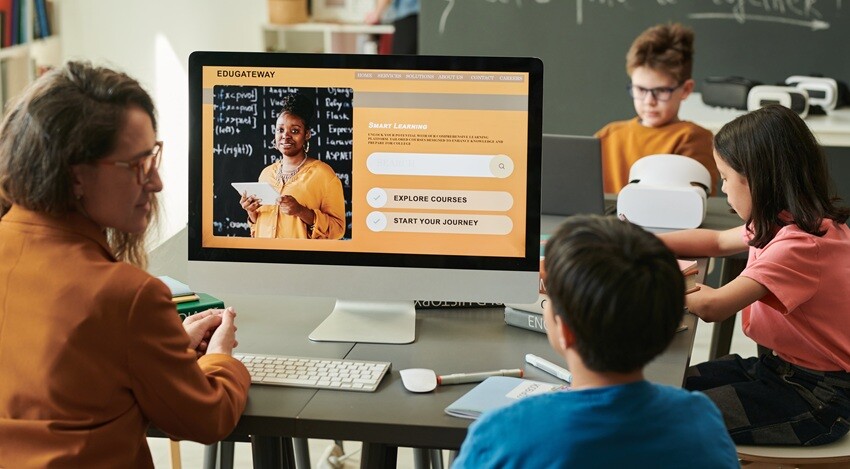
Education is not simply about remembering information. Students also need to understand what they learn, ask questions, examine evidence, and make thoughtful decisions. These abilities are often described as critical thinking.
Critical thinking helps students look beyond simple answers. Instead of accepting every piece of information immediately, they learn to consider where it came from, whether it is supported by evidence, and whether there may be another way to understand the subject.
This skill can be useful in school, university, professional life, and everyday situations.
What Is Critical Thinking?
Critical thinking is the process of carefully examining information before reaching a conclusion. It involves asking questions, comparing different ideas, identifying assumptions, and using evidence to support decisions.
For example, when a student reads an article online, critical thinking encourages them to consider who published it, what evidence is provided, and whether other reliable sources support the same information.
This approach helps students become more independent learners rather than relying entirely on someone else to tell them what to believe.
Asking Better Questions
Questions are an important part of learning. A student who asks thoughtful questions often develops a deeper understanding of a subject.
Instead of asking only, “What is the answer?” students can also ask:
- Why does this happen?
- How do we know this is correct?
- What evidence supports this idea?
- Could there be another explanation?
- What might happen if the situation changed?
These questions encourage students to explore a topic instead of simply memorizing a response.
Evaluating Information
Students have access to more information than ever before. Search engines, social media, websites, videos, and online publications can provide useful educational material, but not everything available online is accurate.
Learning to evaluate information is therefore an important academic skill.
Students can begin by checking the source of information, looking for supporting evidence, comparing multiple reliable sources, and considering when the information was published.
These habits can reduce the risk of accepting inaccurate information and help students conduct better research.
Learning Through Discussion
Classroom discussions can also strengthen critical thinking. When students hear different opinions, they have an opportunity to consider ideas from another perspective.
A respectful discussion does not require everyone to reach the same conclusion. Instead, students can explain their reasoning, listen to others, and reconsider their position when new evidence is presented.
Teachers can encourage this process by asking students to explain not only their answers but also how they reached them.
Connecting Ideas
Critical thinking also helps students connect information from different subjects.
For example, a lesson about environmental science may involve concepts from biology, geography, economics, and technology. Understanding how these areas influence one another can give students a broader view of the issue.
Making connections between subjects can also make learning more interesting because students begin to see how classroom knowledge applies to real-world situations.
The Importance of Evidence
Good decisions are usually supported by reliable evidence. Students can learn this principle through research projects, experiments, essays, and classroom activities.
When making an argument, they should be encouraged to explain why they believe something and provide evidence to support their position.
This does not mean that every question has one simple answer. In many subjects, different interpretations can exist. The important part is learning how to support ideas with logical reasoning and credible information.
Technology and Critical Thinking
Technology can support critical thinking when it is used thoughtfully. Digital tools can help students research topics, compare information, organize ideas, and collaborate with classmates.
However, technology can also make it easy to accept information without checking it. Automated answers and online content may appear convincing even when they contain errors.
For this reason, students should learn to use technology as a tool for exploration while continuing to apply their own judgment.
Preparing Students for the Future
Critical thinking is useful beyond education. Adults make decisions about careers, finances, technology, relationships, and many other areas of life.
Students who learn how to analyze information and consider evidence can carry these skills into their future careers and communities.
The ability to think carefully is particularly valuable in workplaces where employees are expected to solve problems, communicate ideas, and make decisions independently.
Final Thoughts
Critical thinking is one of the most valuable skills students can develop during their education. It encourages curiosity, careful research, logical reasoning, and independent learning.
Schools and universities can support this development by giving students opportunities to ask questions, discuss ideas, evaluate evidence, and solve real-world problems.
When students learn not only what to think but also how to think carefully, education becomes more than memorization. It becomes a foundation for lifelong learning and responsible decision-making.
Leave a Reply