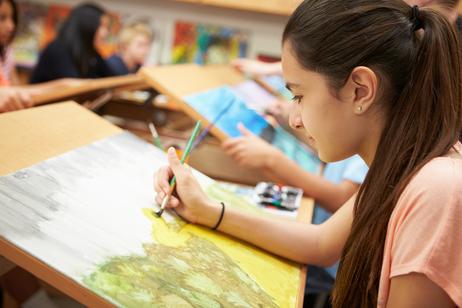
Children learn about the world in many ways. They ask questions, experiment with materials, tell stories, create pictures, move to music, and express ideas through imaginative play. Arts education gives these natural interests a meaningful place in the learning process while helping children develop creative, practical, and social skills.
The benefits of arts education for children extend beyond learning how to draw, sing, dance, or perform. Well-planned arts activities can give children opportunities to express themselves, explore different perspectives, collaborate with classmates, and develop confidence in their abilities.
Arts education includes visual arts, music, dance, drama, creative writing, and other artistic disciplines. It can be taught as a dedicated subject or integrated into lessons across the curriculum.
When schools provide regular, inclusive, and well-supported arts experiences, children can explore their interests while developing skills that contribute to their educational and personal growth. Understanding these benefits can help parents and teachers make informed decisions about how the arts should be included in children’s education.
What Is Arts Education?
Arts education is the teaching and learning of artistic skills, techniques, ideas, and forms of expression. It allows children to explore creative processes, develop their abilities, understand different artistic traditions, and communicate through different mediums.
It can take place in schools, community centers, museums, studios, and other learning environments.
Common forms of arts education include:
- Visual arts: Drawing, painting, sculpture, collage, and design.
- Music: Singing, rhythm, musical instruments, listening, and composition.
- Dance: Movement, coordination, choreography, and physical expression.
- Drama: Acting, storytelling, improvisation, and role-play.
- Creative writing: Poetry, imaginative stories, scripts, and expressive writing.
- Digital arts: Photography, animation, illustration, and age-appropriate digital design.
Arts education involves more than producing a finished artwork or performing on stage. Children also learn through planning, experimenting, revising, practicing, and reflecting on their work.
For example, when a child creates a painting, they may experiment with colors, decide how to arrange shapes, solve problems when something does not work, and explain the meaning of the final image. Each step creates an opportunity for learning.
10 Benefits of Arts Education for Children
Arts education can contribute to children’s development in several important ways. The specific benefits depend on the activity, the quality of instruction, the child’s interests, and the opportunities available for participation.
1. Encourages Creativity and Imagination
Creativity is one of the most visible benefits of arts education for children. Art activities encourage students to explore ideas, experiment with materials, and discover different ways to express what they imagine.
During a drawing activity, for example, a teacher might ask students to design an imaginary animal that could survive in a desert. Children must decide what the animal looks like, how it moves, and what features help it survive.
There is no single correct design. Students can develop individual solutions while learning to communicate their ideas.
Creative activities can help children practice flexible thinking, explore alternatives, and become more comfortable experimenting with new approaches.
2. Supports Emotional Expression
Children may sometimes find it difficult to describe their thoughts and feelings in words. Art, music, movement, and storytelling can provide additional ways to communicate experiences and ideas.
A child might use colors to represent different moods, write a short poem about a memorable event, or create a character who faces a familiar challenge.
Teachers can invite children to explain their work without assuming that a particular color, drawing, or performance reveals a specific emotion.
Arts activities should provide opportunities for expression without forcing children to share personal information they would prefer to keep private.
3. Builds Confidence and Self-Esteem
Creating something, learning a new technique, or completing a performance can help children recognize their progress and abilities.
For instance, a student who initially struggles to play a simple musical rhythm may gradually improve through practice. Seeing that progress can encourage the student to continue working toward a goal.
Classroom exhibitions, performances, and presentations can also help children share their achievements with others.
Teachers can strengthen this experience by recognizing effort, improvement, originality, and persistence rather than praising only the most polished results.
4. Develops Fine Motor Skills and Coordination
Many arts activities involve controlled movements and coordination between the hands and eyes.
Drawing, cutting paper, shaping clay, threading beads, playing instruments, and handling art materials give children opportunities to practice physical control.
For younger students, using crayons or paintbrushes can provide practice with grip, hand movements, and precision. Music and dance activities can involve timing, rhythm, balance, and coordinated movement.
These opportunities complement other forms of physical development and classroom learning.
5. Encourages Communication Skills
Arts activities give children opportunities to communicate ideas through images, movement, sound, stories, and performances.
Drama exercises can help students practice speaking clearly, listening to others, and responding to different situations. Group art projects can encourage children to explain their choices and discuss how they want to present a shared idea.
For example, students preparing a short classroom performance may need to agree on roles, organize dialogue, and communicate their interpretation of a story.
These experiences allow children to practice expressing ideas in different forms and considering how others interpret their work.
6. Strengthens Collaboration and Teamwork
Many artistic projects involve working with others. Children may create a mural, perform in a musical group, prepare a play, or design a shared exhibition.
These activities can help students practice cooperation, negotiation, listening, and responsibility.
A group mural, for example, requires students to decide on a theme, divide the available space, share materials, and coordinate different contributions.
Teachers should provide clear roles and ensure that every child has a meaningful opportunity to participate. This prevents one or two students from controlling the entire project.
7. Encourages Persistence and Problem-Solving
Artistic work does not always go according to plan. A sculpture may become unstable, a drawing may not match the original idea, or a musical passage may require repeated practice.
These challenges give children opportunities to identify problems, test solutions, and revise their work.
For example, students building a cardboard model may discover that it collapses when they add a roof. They can investigate the problem, strengthen the base, or try a different design.
Through guided practice, children can learn that improvement often requires experimentation and persistence.
8. Promotes Cultural Awareness and Respect for Diversity
Art reflects the histories, traditions, experiences, and values of different communities. Exploring diverse artistic forms can help children understand that people communicate and express ideas in many ways.
Students might study traditional patterns, compare musical instruments from different regions, explore storytelling traditions, or examine how artists represent their communities.
Teachers should present cultural material respectfully and avoid suggesting that one artwork represents the beliefs or experiences of an entire population.
When handled thoughtfully, arts education can encourage curiosity, cultural understanding, and appreciation for different perspectives.
9. Creates Opportunities for Meaningful Learning Across Subjects
Arts education can complement learning in mathematics, science, language, history, and other subjects.
For example, students might use geometric shapes to create patterns, design a model of a plant, illustrate a scene from a historical story, or write a song that helps them remember scientific vocabulary.
These activities can provide additional ways to explore concepts and communicate understanding.
However, arts activities should not always be judged by whether they improve test scores in other subjects. Learning artistic techniques, appreciating creative work, and developing forms of expression are valuable educational goals in their own right.
10. Supports Engagement and Enjoyment in School
Arts activities offer different ways for children to participate in classroom learning. A student who feels less comfortable with a written assignment may enjoy expressing an idea through a drawing, model, performance, or piece of music.
Variety can make classroom experiences more engaging, especially when activities allow students to make choices and work toward meaningful outcomes.
Teachers should still provide clear learning goals and appropriate guidance. Enjoyment is valuable, but students also need opportunities to develop skills and reflect on their progress.
How Arts Education Supports Different Areas of Child Development
Arts education can be considered through several connected areas of development. These categories overlap, and an individual activity may support more than one area.
Cognitive Development
Cognitive development involves skills such as thinking, planning, remembering, recognizing patterns, and solving problems.
Art activities can require children to compare options, make decisions, follow sequences, and adjust their plans. Learning a musical piece, for example, involves attention to patterns and repeated practice.
The extent to which these experiences transfer to unrelated academic skills depends on the activity and the available evidence. It is better to view artistic learning as a valuable educational experience rather than assuming that every arts activity automatically increases general intelligence.
Social Development
Group performances, shared artwork, and collaborative projects give children opportunities to work with classmates.
Students can practice taking turns, listening to different opinions, sharing resources, and agreeing on a common goal.
Teachers can support these skills by establishing respectful classroom expectations and providing structured opportunities for everyone to contribute.
Emotional Development
Children can use artistic activities to explore ideas, communicate experiences, and reflect on different perspectives.
Completing a challenging project can also provide opportunities to practice persistence and recognize personal improvement.
Arts classes should not be treated as a substitute for professional mental health support when a child needs it. Their educational role is to provide creative learning experiences in a supportive environment.
Physical Development
Drawing, painting, sculpting, dancing, and playing instruments can involve fine or gross motor coordination.
The physical skills involved depend on the activity. Cutting shapes requires different movements from balancing during dance or coordinating fingers while playing an instrument.
Providing varied opportunities allows children to practice different types of movement and control.
Why Arts Education Matters in Elementary School
Elementary school is an important period for exploring interests, developing foundational skills, and learning how to participate in a classroom community.
Arts education can give young children opportunities to experiment, make decisions, and communicate ideas while learning new techniques.
Makes Learning More Accessible
Children have different strengths, interests, and experiences. Art, music, drama, and movement can provide additional ways to approach a topic.
For example, students learning about a story can read a passage, illustrate an important scene, or perform a short dialogue. Each activity offers a different way to engage with the material.
Teachers should ensure that artistic activities complement rather than replace the reading, writing, or subject-specific instruction children need.
Encourages Exploration and Curiosity
Young learners often benefit from opportunities to investigate materials and ideas.
A classroom activity involving different textures, sounds, or shapes can encourage children to observe carefully, ask questions, and test possibilities.
Teachers can guide exploration by asking questions such as “What happens if you combine these colors?” or “How could you make this structure stronger?”
Gives Students Opportunities to Demonstrate Strengths
Some children may communicate ideas more confidently through images, music, movement, or storytelling than through a conventional written response.
Arts activities create additional opportunities for students to demonstrate creativity, technique, interpretation, and understanding.
Teachers should still assess the specific learning goals of each task and provide appropriate instruction to help students develop new skills.
Practical Arts Activities for Children
Parents and teachers can introduce arts education through simple activities that require limited equipment. The best activities are appropriate for the child’s age, interests, and abilities.
1. Creative Drawing and Painting
Provide paper, pencils, crayons, or washable paints and invite children to explore a theme.
Possible prompts include drawing an imaginary city, illustrating a favorite story, or creating a picture of a place where they feel comfortable.
Encourage children to describe their choices and experiment with different materials.
2. Music and Rhythm Games
Use clapping, simple percussion instruments, or body movements to explore rhythm.
Children can repeat a pattern, create their own sequence, or work in groups to produce a short rhythmic performance.
These activities offer opportunities to practice listening, timing, and coordination.
3. Storytelling and Drama
Invite children to invent characters, act out a familiar story, or create a short scene with classmates.
Drama activities can involve improvisation, dialogue, movement, and collaborative planning.
Teachers should establish clear boundaries so that participation feels safe and students are not pressured to perform in ways that make them uncomfortable.
4. Recycled-Material Art
Provide safe, clean materials such as cardboard, paper tubes, and scrap paper. Ask children to create a model, sculpture, or imaginary machine.
Students can plan their designs, test how materials fit together, and revise the construction when necessary.
Supervise the activity and avoid sharp, toxic, or otherwise unsuitable materials.
5. Dance and Creative Movement
Play age-appropriate music and invite children to explore movements that represent different shapes, directions, or ideas.
Students might create a short sequence of movements individually or work together to build a simple group performance.
Adapt activities for different mobility needs so that all children have meaningful ways to participate.
6. Collaborative Classroom Artwork
Ask a group of students to design a mural or large collage around a shared theme, such as nature, community, or friendship.
Each child can contribute a drawing or element while the class decides how to organize the complete artwork.
This activity combines creative choices with opportunities to practice cooperation and communication.
How Teachers Can Integrate Arts Into the Curriculum
Arts education can be offered as a dedicated subject and used thoughtfully to complement other lessons.
Connect Art With Language and Literacy
Students can illustrate a story, write a poem, create a character mask, or perform a scene from a book.
These activities can encourage children to think about characters, settings, language, and themes.
Connect Art With Mathematics
Students can explore patterns, symmetry, shapes, measurement, and spatial relationships through visual design.
For example, children can create repeating patterns using shapes or investigate symmetry by designing a butterfly or geometric image.
The teacher should make the mathematical connection explicit rather than assuming that creating an artwork automatically teaches the relevant concept.
Connect Art With Science
Students can draw labeled diagrams, build models, create nature journals, or develop visual presentations about scientific topics.
A detailed drawing of a plant, for instance, can help children observe its structures and record information.
Scientific accuracy should remain an important part of the activity when the objective is to demonstrate science knowledge.
Connect Art With History and Culture
Music, visual art, architecture, dance, and storytelling can help students investigate historical periods and cultural traditions.
Teachers can encourage students to examine the context in which an artwork was created and consider what it communicates about the people and circumstances involved.
Use reliable materials and present different cultures with care and respect.
How Parents Can Support Arts Education at Home
Parents do not need to be professional artists to encourage children’s creativity. Everyday experiences can provide valuable opportunities to explore artistic interests.
Make Creative Materials Available
Keep age-appropriate materials such as paper, crayons, washable paints, and modeling materials in an accessible place.
Children should have opportunities to experiment without feeling that every activity must produce a perfect result.
Encourage Process Rather Than Perfection
Ask children about their ideas and decisions instead of comparing their artwork with other children’s work.
Questions such as “What part did you enjoy making?” or “What would you like to try next time?” encourage reflection and creative exploration.
Explore Music, Stories, and Local Culture
Listen to different kinds of music, visit museums when possible, attend suitable community performances, or discuss traditional crafts and stories.
These experiences help children discover a wider range of artistic forms and cultural expressions.
Respect Individual Interests
Not every child will enjoy painting or playing an instrument. Some may prefer dance, photography, building models, storytelling, or drama.
Offer opportunities to try different activities while allowing children to develop their own interests over time.
Celebrate Effort and Progress
Display artwork at home, listen to a child’s original song, or encourage them to explain a story they have written.
Recognition can help children feel that their creative efforts matter, even when the finished product is simple.
What Does Research Say About the Benefits of Arts Education for Children?
Research suggests that arts education can provide valuable learning experiences, but the strength of evidence varies depending on the art form, the program, and the outcome being measured.
A 2021 systematic review of school-based arts education found some evidence of beneficial effects on selected competencies. However, the researchers noted that the available studies were limited by factors such as small sample sizes, varied program designs, and differences in study quality.
A separate systematic review published in 2018 examined arts participation and children’s academic achievement. Its findings were mixed, although some studies reported positive outcomes such as greater confidence, creativity, and more positive attitudes toward learning.
UNESCO also emphasizes the role of arts and cultural education in supporting creative thinking, collaboration, cultural understanding, and diverse learning experiences.
These findings support providing meaningful opportunities for children to learn through the arts. They do not mean that every arts program will produce the same outcomes or that arts participation automatically improves performance in every academic subject.
Schools should therefore evaluate programs based on their goals, the quality of instruction, student participation, and the specific outcomes they intend to support.
Common Challenges in Arts Education and How to Address Them
Although arts education can be valuable, schools and families may face practical challenges when trying to provide consistent opportunities.
Limited Budgets and Materials
Art supplies, instruments, performance spaces, and specialist instruction may require resources that are not available in every school.
Teachers can use low-cost materials, recycled resources, simple rhythm activities, and collaborative projects. Resource limitations should not prevent children from experiencing a variety of artistic activities.
Limited Classroom Time
Schools may face pressure to prioritize tested subjects and reduce time for the arts.
One practical solution is to protect regular arts lessons while identifying appropriate opportunities for arts integration across the curriculum.
Integration should complement dedicated arts instruction rather than eliminate opportunities to learn artistic techniques and knowledge.
Different Skill Levels
Children enter arts classes with different levels of experience and confidence.
Offer tasks with multiple ways to participate and provide guidance that helps each child progress. Avoid comparing beginners with students who have received years of outside instruction.
Fear of Making Mistakes
Some children may hesitate to draw, sing, dance, or perform because they worry about being judged.
Teachers can establish a supportive environment where experimentation is encouraged and feedback focuses on specific skills and improvement.
Students should also have alternatives when public performance or a particular form of expression makes them uncomfortable.
Frequently Asked Questions
What are the main benefits of arts education for children?
Arts education can provide opportunities to develop creativity, self-expression, communication, collaboration, coordination, persistence, and cultural awareness. The outcomes depend on the activity, teaching quality, and the child’s participation.
Why is arts education important in schools?
Arts education gives children opportunities to learn artistic techniques, explore creative ideas, express themselves, and understand different forms of culture. It can also complement learning in other subjects when activities are designed around clear educational goals.
At what age should children start arts education?
Children can begin exploring age-appropriate artistic activities in early childhood through drawing, music, movement, storytelling, and creative play. As they grow, they can develop more advanced techniques and explore specific artistic disciplines.
Does arts education improve academic performance?
Some studies report positive academic outcomes, but the evidence is mixed and varies by program and subject. Arts education should be valued for its direct artistic and developmental benefits rather than judged only by whether it improves test scores in other subjects.
How does art help children’s emotional development?
Artistic activities can give children opportunities to communicate ideas, explore feelings through stories and images, and reflect on experiences. Adults should avoid assuming that a particular artwork reveals a child’s emotional state without considering the child’s own explanation and circumstances.
How can teachers include arts in everyday lessons?
Teachers can use drawing, music, drama, movement, and design to complement topics in language, mathematics, science, and history. Activities should have clear learning objectives and should reinforce, rather than replace, essential subject instruction.
What if a child is not interested in traditional art activities?
Offer a variety of options, such as music, storytelling, photography, drama, dance, digital design, or model-making. Let the child explore different forms of expression without requiring them to enjoy every artistic discipline.
How can parents encourage creativity at home?
Provide accessible materials, make time for creative exploration, visit cultural events when possible, and show interest in children’s ideas. Praise effort and experimentation instead of focusing only on producing polished artwork.
Conclusion
Arts education plays an important role in creating a rich and varied learning environment for children. Through drawing, music, dance, drama, creative writing, and other artistic activities, students can explore ideas, communicate in different ways, practice new skills, and appreciate diverse cultural experiences.
The benefits of arts education for children include opportunities to develop creativity, confidence, collaboration, coordination, persistence, and self-expression. These benefits are most likely to emerge when activities are meaningful, instruction is appropriate, and children have regular opportunities to participate.
Parents can encourage artistic exploration at home, while teachers can provide structured lessons and connect creative activities with wider learning goals. Schools should also recognize that the arts have educational value in their own right, even when a direct improvement in test scores cannot be demonstrated.
By making arts education accessible, inclusive, and engaging, families and schools can help children discover their abilities and develop a lasting appreciation for creativity and culture.
Leave a Reply